This WHO report provides a concise summary of the Health Financing Progress Matrix assessment in Uganda, conducted as part of the mid-term review of the national health financing strategy. The report was conducted using a highly participatory process, with the...
History of primary health care in Iran
Iran’s primary health care system has evolved since the early 1980s into a model of equitable and community-based health service delivery. Rooted in the principles of the 1978 Alma-Ata Declaration, the system established a nationwide network of rural and urban health...

Nepal: National Health Financing Strategy 2023- 2033
The Government of Nepal has recently endorsed a new ten-year strategy for health financing with the aim of ensuring equitable financial management to achieve universal health coverage (UHC) in Nepal. The National Health Financing Strategy 2080- 2090 includes strategic...

Progress has slowed on universal health coverage: Here’s what needs to happen
In 2021, 4.5 billion people – half the world’s population – were not covered by essential health services, says a report from the World Health Organization and World Bank.The report, titled "Tracking Universal Health Coverage: 2023 Global Monitoring Report," shows...
Sharing experiences on the universal health cover programme in Côte d’Ivoire
Building on a ten in country analysis of SHP and HF institutional frameworks initiated in the previous reporting period, P4H-CD provided in-depth support to P4H-CFPs from Cote d’Ivoire and Cambodia with the support of a WHO contracted consultant. The consultant...
Mozambique: Analysis of the Socioeconomic Effects of User Fees in the Public Health Sector
A Report by the Citizen's Observatory for Transparency and Good Governance in the Health Sector analyses the impact of health services user fees on disadvantaged populations in Mozambique. Language: Portuguese

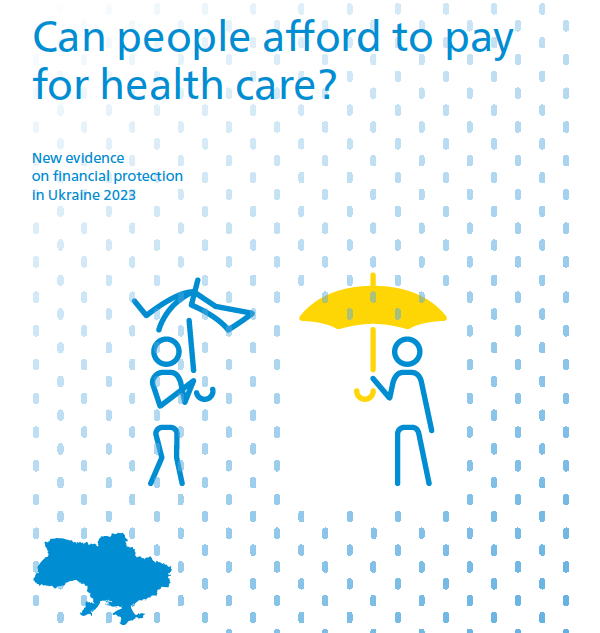
New WHO report outlines concrete steps to make health care more accessible for people in Ukraine
As illustrated here by WHO, around 2.5 million households in Ukraine experienced catastrophic health spending in 2021. This represents nearly 1 in 5 households – a share that is higher than in many other countries in the WHO European Region, according to a new report...

Namibia health sector Public Expenditure Review
This report presents the findings of Namibia’s health sector's first Public Expenditure Review (PER). A PER is a comprehensive analysis of public spending over time, assessing its quantity and quality in relation to policy goals and performance indicators. Among...
Senegal: National health financing strategy 2017
La stratégie nationale de financement de la santé repose sur une vision d’un Sénégal où toutes les populations ont accès à des services de santé de qualité sur la base d’un financement durable respectant les principes d’équité et de solidarité. La...
Côte d’Ivoire: National social protection strategy (2013)
L’élaboration de cette Stratégie Nationale de Protection Sociale découle d’un processus de dialogue national, de recherche, d’analyse d’options politiques et de concertation. Le Gouvernement de Côte d’Ivoire s’inscrit ainsi dans les orientations adoptées au...
Zanzibar Health Services Fund Act 2023
Zanzibar makes accelerated efforts to attain UHC The government of Zanzibar is dedicated to ensuring that every citizen has access to affordable and high-quality healthcare, aiming to achieve universal health coverage (UHC). As part of its ongoing efforts towards UHC,...

TCHAD : RAPPORT DES COMPTES DE SANTE-2018
National Health Systems Strategy for Malta 2023-2030
The document outlines the strategic direction being pursued by the Maltese Government to ensure that health features as a key priority across all other national policies, sectors, and investments. It sets out the framework that anchors the vision for the development...
Germany: health system summary 2022
Germany’s decentralized health system operates under compulsory statutory health insurance (SHI) and substitutive private health insurance (PHI), with broad, equitable benefits and low out-of-pocket costs, spending 11.7% of GDP on health—the highest among EU...
Supporting Health-Care Financing Reform in Mongolia: Experiences, Lessons Learned, and Future Directions
Mongolia's healthcare financing reform has introduced health insurance and shifted to an output-oriented model, aligning with a market economy. The Asian Development Bank’s support offers valuable lessons for other countries in the region. The Asian Development Bank’...